beautywhim
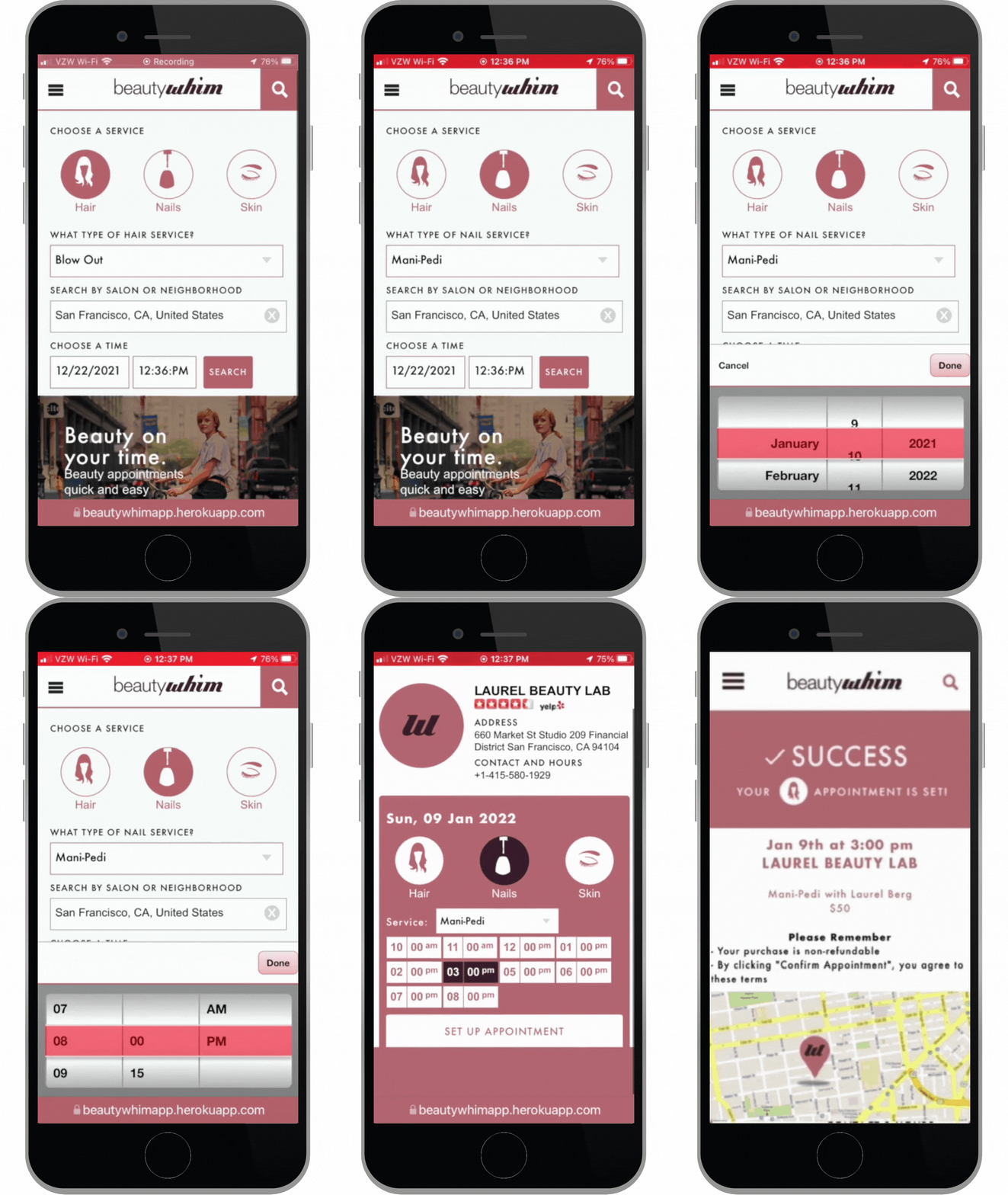
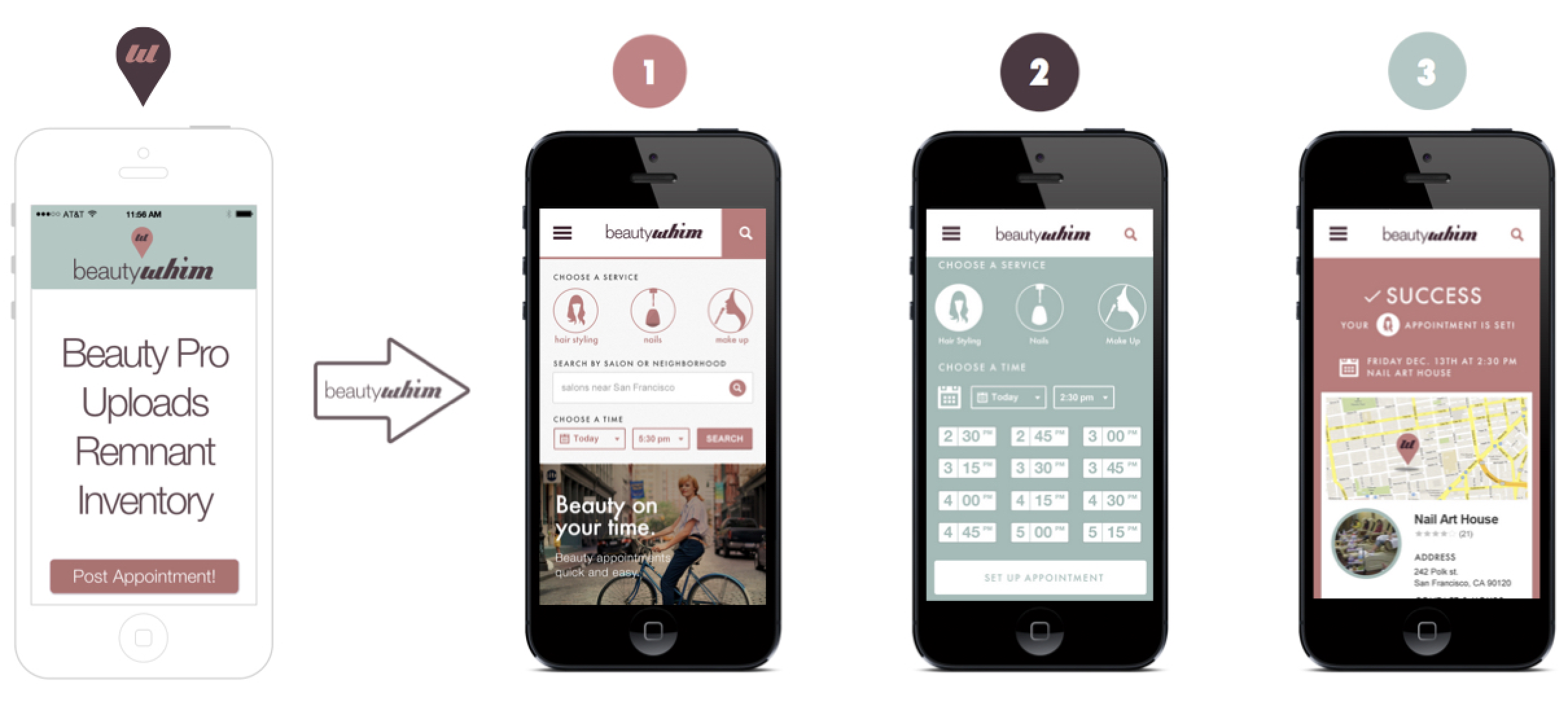
A consumer-facing mobile app and SaaS connecting beauty service seekers with open appointments nearby in real-time. The pro app to allow beauty service providers a seamless way to fill in schedule gaps.
Search, discover, book and pay. Beauty…On Your Time.

Snapshot
Role
Founder & UX Designer
Product
Consumer mobile app + provider web app
Problem Type
Multi-sided marketplace. Time-sensitive demand. Two very different user needs
What this case demonstrates
How I frame ambiguous problems, make tradeoffs, and design for real behavior instead of ideal workflows.
Problem
Booking beauty appointments was fragmented and inefficient, while service providers struggled to fill last-minute openings.
There was no real-time marketplace connecting these needs.
Booking beauty appointments sounds simple, but in practice it breaks down quickly.
The challenge wasn’t building a scheduling tool.
It was designing a system that worked when time and attention were limited.
On the Consumer side:
Availability is unpredictable
Schedules change frequently
Finding a good option can take far longer than the appointment itself
On the Provider Side:
Last-minute cancellations are common
Empty chairs mean lost revenue
Administrative tools are often clunky or ignored during busy days

Framing
Instead of asking, “How do we improve booking?” I focused on a more specific question:
How do we help people make confident decisions quickly,
while fitting into how providers actually work?
This framing led to a few guiding principles:
Design for short decision windows
Reduce cognitive load on both sides
Treat trust and clarity as core UX problems
Key Decisions
1. Designed for short decision windows
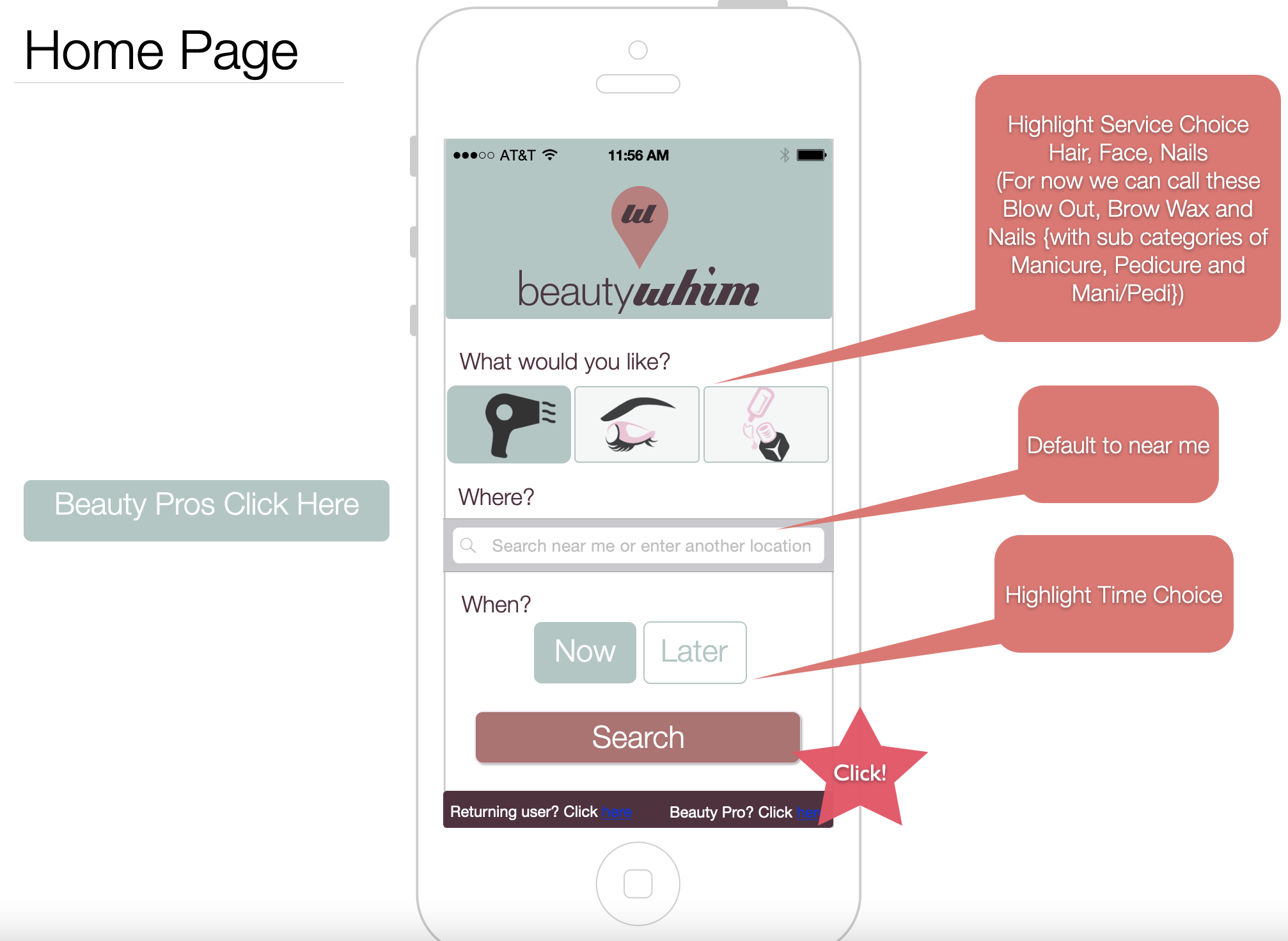
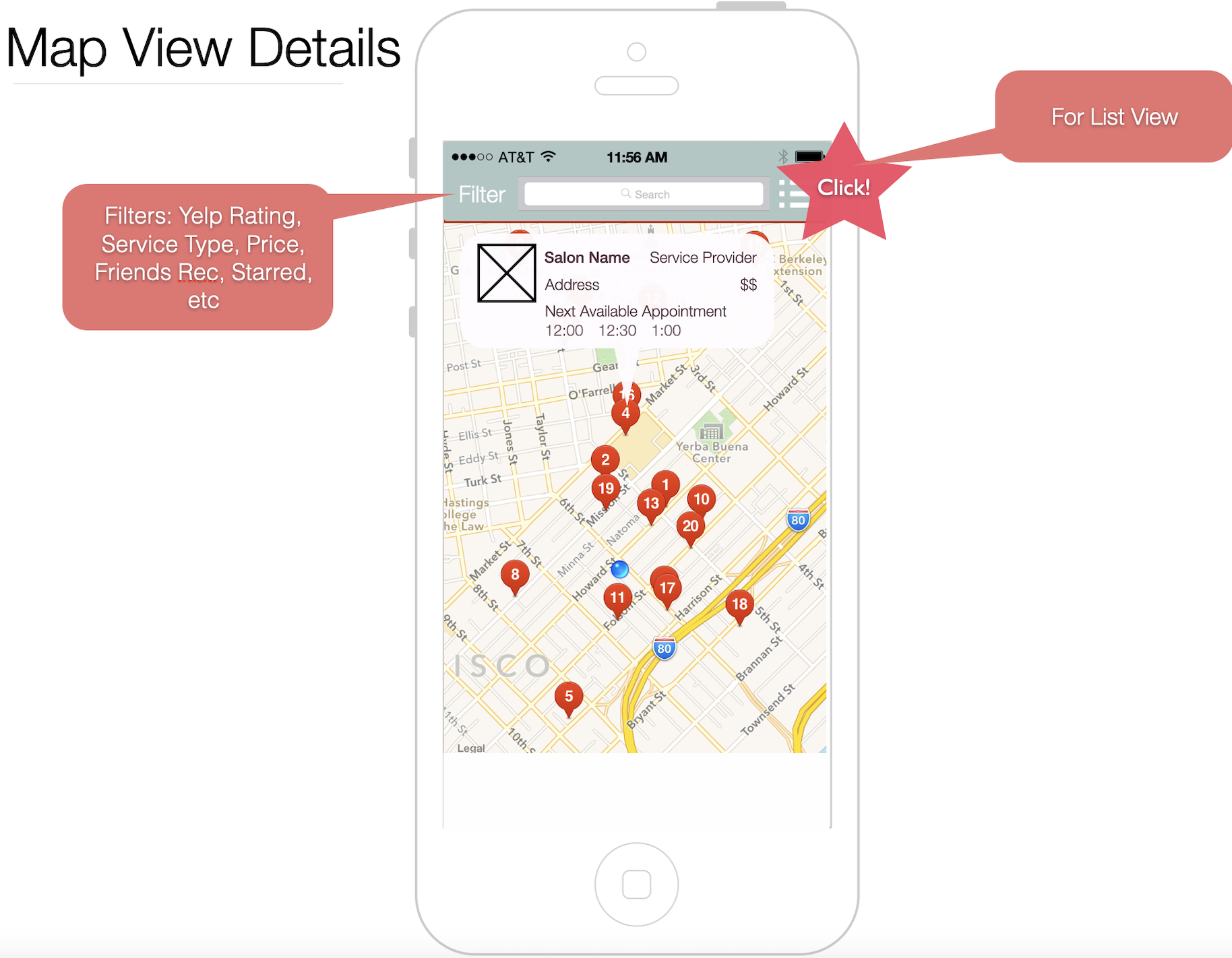
Many users were booking around unpredictable schedules. I focused the experience on near-term availability so people could decide quickly without overthinking.
2. Reduced choice to increase confidence
I constrained options around time, location, and service type to lower anxiety and help users commit.
3. Built distinct experiences for consumers and providers
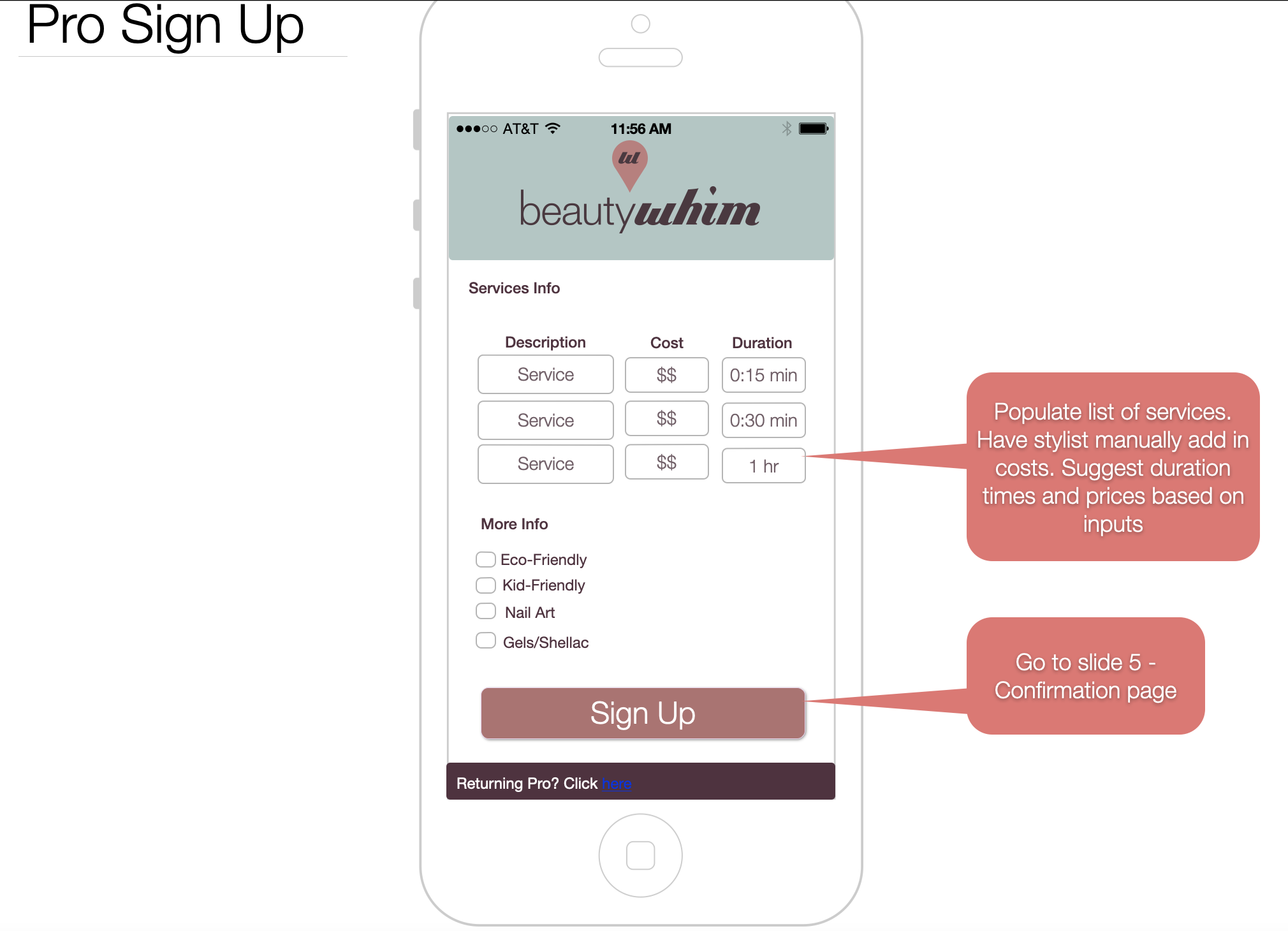
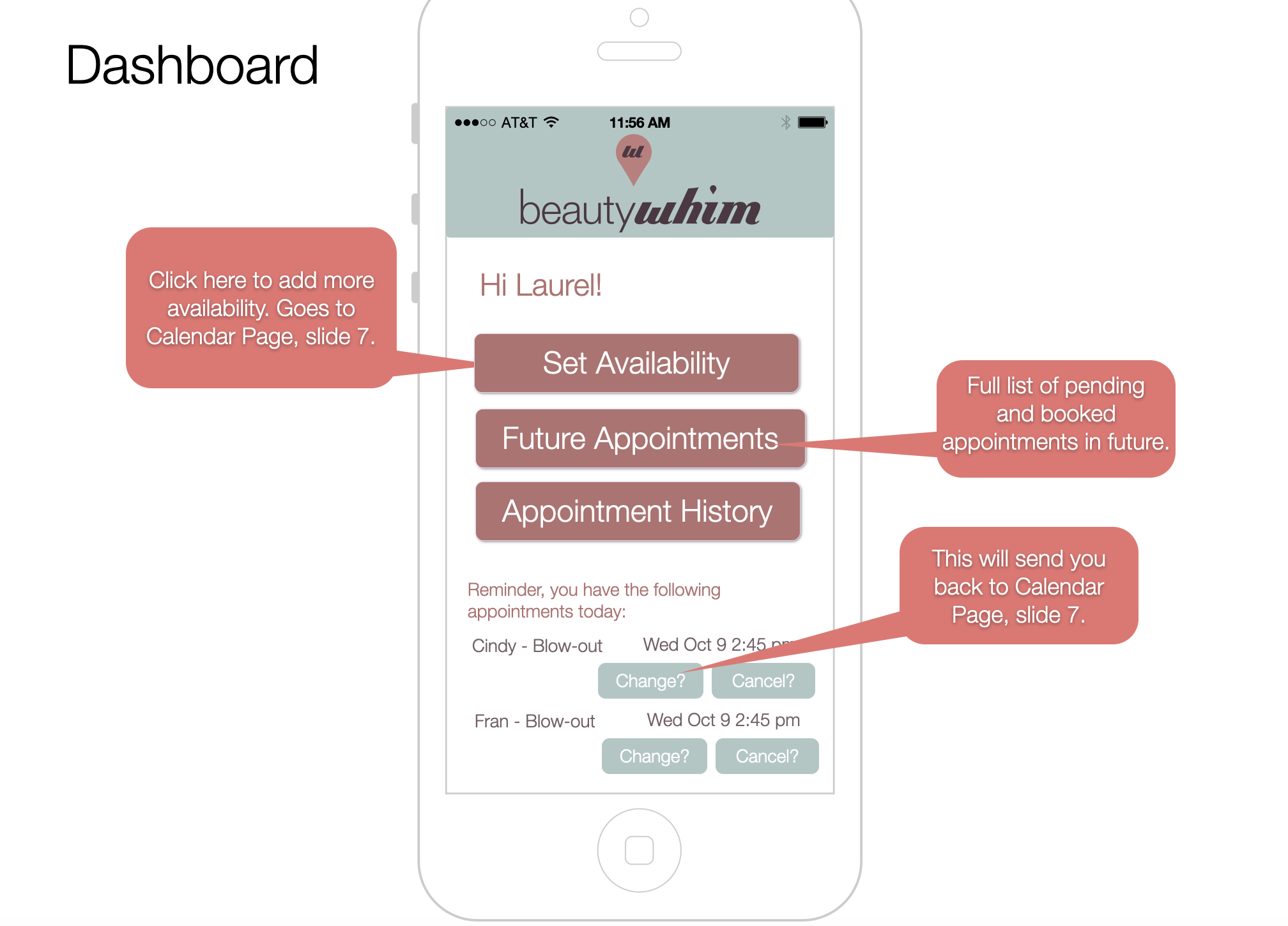
Providers were busy and time-poor. I designed a lightweight provider flow that fit naturally into their day without added overhead.
4. Established trust through clarity, not volume
Clear pricing, familiar patterns, and simple descriptions reduced uncertainty more effectively than dense social proof.
What I Owned
I was responsible for:
Defining the product direction
Conducting user and provider research
Designing the consumer and provider experiences
Working closely with engineering to ship
Making tradeoffs when constraints conflicted
This was not a conceptual exercise. Decisions had immediate consequences.
Outcomes
Launched a live product in San Francisco
Onboarded providers across multiple neighborhoods
Enabled faster booking decisions for consumers
Gained real-world feedback that informed iteration
BeautyWhim didn’t become a massive company, but it was a real product used by real people, which shaped how I design today.